What have Queen Victoria, Lord Nelson and Lord Byron, all got in common?
They have all been the subject of BBC television documentaries, written and produced by a former West Heath School pupil.
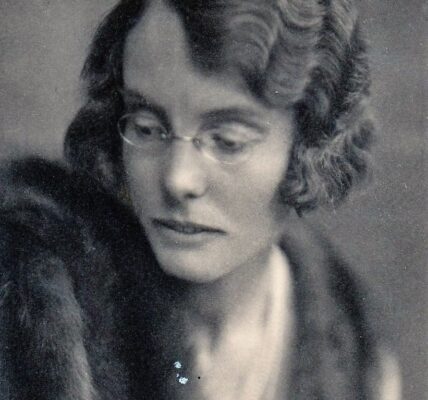
West Heath has an impressive list of pupils who have gone on to become distinguished figures in their chosen fields. However, when these are being listed, the name of Nesta Pain (nee Taylor) is rarely mentioned – but it should be. Her ability to write, research, produce and direct radio and television documentaries, combined with her work as an author, has earned her a place in the history of the BBC as one of its most inventive and prolific contributors.
Nesta was born in Liverpool on 27 July 1905 and died 31 years ago on 23 July 1995, just four days before her 90th birthday.

Her education, which took place roughly between 1916 and 1923, means she would have attended West Heath when it was still located at 1 Ham Common in London before the school move down to Sevenoaks in 1932.
She went on to study Classics at the University of Liverpool. graduating with first-class honours before undertaking postgraduate research in comparative philology at Somerville College, Oxford. Other archivists have noted that these achievements suggest West Heath helped foster both her intellectual curiosity and her love of language.
Unfortunately, there is a frustrating gap in Nesta’s historical records. Available biographies simply state that she attended West Heath Girls’ School. Unfortunately, very little has been recorded about Nesta’s actual experiences as a pupil at West Heath. No surviving memoirs, school magazines or biographies appear to describe her favourite subjects or school activities.
Florence Nesta Kathleen Pain, known throughout her career simply as Nesta Pain, lived a life that seemed tailor-made for someone fascinated by stories. Born into a distinguished family, she could easily have followed a conventional path. Instead, she became one of the BBC’s most inventive broadcasters and a prolific writer, introducing generations to history, science and biography in a lively, accessible way.
In 1926 she married Coard Henry Pain, whose surname she retained throughout her professional life, and they had one daughter. During the Second World War, after separating from her husband, she moved to London with her daughter and joined the BBC in 1942. It proved to be the turning point of her career.

At the BBC, Nesta became one of the pioneers of the Features Department, where factual broadcasting was transformed into something vivid and dramatic. Rather than simply listing dates and events, she preferred to bring historical figures to life with carefully crafted scripts and imaginative production.
She wrote, produced and directed programmes for the Home Service and the Third Programme, and later made television documentaries on figures such as the aforementioned Queen Victoria, Lord Nelson and Lord Byron, among others. She also played an important part in encouraging the young playwright John Mortimer to write The Dock Brief, a radio play that later became a successful film.
Writing books came naturally alongside broadcasting. Her interests ranged astonishingly widely. One year she might be explaining insects in Grassblade Jungle, another she would be writing about Louis Pasteur, the medieval ruler Empress Matilda, or the domestic life of George III. See examples of her prolific work listed at the end of this article.
Her gift was making complicated subjects readable without oversimplifying them, earning her a reputation as someone who could translate scholarship into engaging prose for the general public.
Friends and colleagues remembered her as energetic, intellectually adventurous and always eager to tackle a fresh subject. Even after retiring from the BBC in 1970, she continued researching and writing.

In her final years, despite poor health after a fall, she reportedly kept her mind active by memorising English and Latin poetry and reading newspapers every morning. She died in London on 23 July 1995.
Although surviving records of Nesta Pain’s years at West Heath School are frustratingly sparse, she left the school as an academically able girl who went on to become a distinguished broadcaster and author. Her life’s work was devoted to making history, science and culture come alive.
Below is a chronological summary of Nesta Pain’s known published books and her principal writing work for radio, television and film.
One difficulty is that the BBC Written Archives contain hundreds of her scripts, many of which were never commercially published, so this list focuses on works that are known from bibliographies, library catalogues and film databases.
| Year | Title | Format | Notes |
| 1944 | The House of Bondage | BBC radio feature | One of her earliest wartime BBC historical features. |
| 1946 | The Hundred Days | BBC radio feature | Historical documentary on Napoleon’s return from Elba. |
| Late 1940s–1950s | Numerous historical and science features | BBC radio features | Produced and wrote many acclaimed Features Department programmes on history, medicine, psychology and science, often working with scientists including Alexander Kennedy. |
| 1955 | The Search for Adam | Book | Popular science and human origins. |
| 1957 | Grassblade Jungle | Book | Natural history for younger readers. |
| 1957 | Louis Pasteur | Biography (children’s) | Part of the “Lives to Remember” series. |
| 1958 | The Man Who Found Out: A Life of Charles Darwin | Biography | Life of Darwin. |
| 1960 | Empress Matilda: Queen Consort, Queen Mother and Lady of the English | Historical biography | Biography of Matilda. |
| 1962 | The English Angevins | History | Survey of the Angevin dynasty. |
| 1964 | The Royal Physician: A Biography of John Radcliffe | Biography | Life of the physician John Radcliffe. |
| 1965 | The Three Edwards | History | The reigns of Edward I, II and III. |
| 1966 | The King and Becket | Historical book | On Henry II and Thomas Becket. |
| 1968 | Worm in the Bud | History/social history | Study of childhood through history. |
| 1972 | The House of Danger | History | About Whitehall Palace. |
| 1973 | The Spanish Armada | History | Account of the 1588 campaign. |
| 1975 | The Hanoverians | History | Popular history of the Hanoverian monarchs. |
| 1978 | George III at Home | Biography/social history | Domestic portrait of the king and his family. |
| 1983 | The Way We Were | Social history | Everyday British life in earlier times. |
Television and film
Nesta Pain was much better known as a writer and producer of factual television than as a dramatist. Here are some of the programmes she is known to have contributed to.
| Year | Title | Format | Notes |
| 1950s–1960s | Various BBC historical documentaries | Television documentaries | Wrote and produced programmes on figures including Queen Victoria, Lord Nelson, Byron and other historical subjects. |
| 1961 | The Queen’s Realm – Royal Palaces (and similar historical programmes) | Television documentary | Representative of her BBC historical work. |
| 1965 | Royal Palaces of Britain | Documentary film/TV | Historical documentary writing. |
Dramatic works
Although she wrote scripts with dramatic elements for BBC Features, Nesta Pain was not primarily a playwright in the conventional sense. Her reputation rests on documentary features rather than stage plays. She did, however write numerous radio features that blended documentary with dramatic reconstruction, wrote scripts for television documentaries, and contributed to BBC productions that mixed narration, actors and historical sources—a style that became a hallmark of the BBC Features Department after the Second World War.
One interesting footnote is that while working at the BBC she became an early supporter of the young playwright John Mortimer, encouraging his writing career and commissioning work from him before he became famous.